What is Yoga and History of Yoga?
What is yoga?
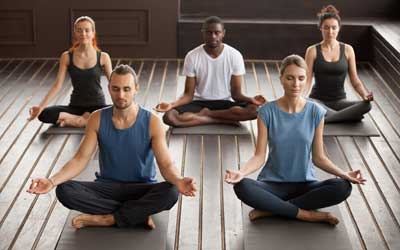
Yoga is an ancient practice that involves physical poses, concentration, and deep breathing.
A regular yoga practice can promoteTrusted Source endurance, strength, calmness, flexibility, and well-being.
Yoga is now a popular form of exercise around the world. According to a 2017 national surveyTrusted Source, one in seven adults in the United States practiced yoga in the past 12 months.
History of Yoga
The history of Yoga is deeply rooted in Indian culture and spiritual heritage, spanning thousands of years:
1. Pre-Vedic Period (Before 3000 BCE)
Archaeological findings from the Indus Valley Civilization (around 3000 BCE) reveal seals depicting figures seated in meditative postures. This indicates that Yoga-like practices existed even in pre-Vedic times.
2. Vedic Period (1500 BCE – 500 BCE)
During the Vedic era, Yoga was practiced in the form of rituals, chants (mantras), and meditation to connect with divine forces. The Vedas, particularly the Rig Veda, mention meditation practices and spiritual disciplines similar to Yoga.
3. Upanishadic Period (500 BCE – 200 BCE)
The Upanishads, philosophical texts, introduced the concept of Brahman (universal consciousness) and Atman (individual soul). They explained Yoga as a tool to realise this connection through knowledge (Jnana Yoga), devotion (Bhakti Yoga), and meditation (Dhyana).
4. Classical Period (200 BCE – 500 CE)
This era marks the systematic codification of Yoga by Maharishi Patanjali, who compiled the Yoga Sutras, outlining the Eight Limbs of Yoga (Ashtanga Yoga):
-
Yama – Moral codes
-
Niyama – Self-purification and discipline
-
Asana – Physical postures
-
Pranayama – Breath control
-
Pratyahara – Withdrawal of senses
-
Dharana – Concentration
-
Dhyana – Meditation
-
Samadhi – State of ultimate bliss
Patanjali is known as the Father of Yoga for formalising and presenting Yoga as a practical path of life.
5. Post-Classical Period (500 CE – 1500 CE)
During this period, various schools of Yoga evolved, such as Hatha Yoga, focusing on physical purification and mastery of body and breath to prepare for higher meditation. Great sages like Gorakhnath and Swatmarama contributed significantly to Hatha Yoga literature.
6. Modern Period (1800 CE onwards)
Yoga was revived and popularised globally by spiritual leaders and Yoga Gurus like Swami Vivekananda, Swami Sivananda, Tirumalai Krishnamacharya, B.K.S. Iyengar, and Pattabhi Jois. They reintroduced Yoga not just as a spiritual path but also as a scientific health system for mental and physical well-being.
Today, Yoga has transformed into a worldwide wellness movement, with International Yoga Day celebrated on 21st June each year to spread its benefits.
Conclusion
Yoga is far beyond physical flexibility; it is the art of living with awareness and peace. Its history reflects the wisdom of ancient sages who dedicated their lives to exploring human potential and consciousness. Incorporating Yoga into daily life brings harmony, health, and spiritual growth – truly a timeless gift from India to the world.
More Information...............
Akhil Bhartiya Yog Avm Prakritik Chikitsa Sansthan
📞 Mobile: +91-92176-03232, +91-93168-50388
✉️ Email: info.abypcs@gmail.com
📞 24/7 Helpline No.: 78726-78726