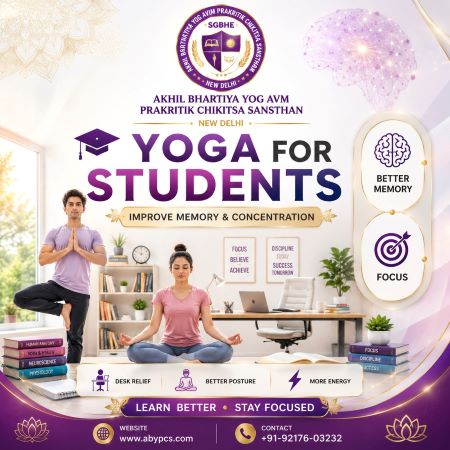
Yoga for Students: Simple Poses to Improve Memory & Concentration (2026)
In today’s fiercely competitive academic environment, students face unprecedented levels of pressure. Between vast syllabi, continuous exams, extracurricular activities, and the endless digital distractions of social media, maintaining focus has become a monumental challenge. Many students find themselves studying for hours, only to struggle with memory retention or experience sudden brain fog during examinations.
While traditional advice urges students to simply "study harder," ancient wellness sciences offer a far more sustainable solution: study smarter by training the brain.
Yoga is not just a physical exercise for flexibility; it is a highly scientific system of neuro-biological training. By integrating specific yoga postures, breathing techniques, and hand gestures into their daily routine, students can naturally optimize cerebral blood flow, balance brain hemispheres, and skyrocket their retention power.
The Science of Yoga and the Student Brain
From a physiological perspective, academic stress triggers the production of cortisol and adrenaline. These hormones activate the amygdala (the brain's emotional center), which essentially locks down the prefrontal cortex—the region responsible for logical reasoning, concentration, and long-term memory formation.
Yoga works by reversing this process:
Increases BDNF (Brain-Derived Neurotrophic Factor)
Regular practice stimulates this vital protein, which promotes the growth and survival of new brain cells (neurogenesis).
Balances Left and Right Hemispheres
Specific postures and breathing techniques synchronize the analytical left brain with the creative right brain, unlocking holistic intelligence.
Optimizes Cerebral Circulation
Inversion poses and deep breathing send a rush of fresh oxygenated blood and glucose directly to the brain cells, clearing mental fatigue instantly.
Best Yoga Postures for Memory and Focus
These selected asanas target neural pathways and physical areas that hold tension during long study sessions.
1. Vrikshasana (Tree Pose)
How to do
Stand straight with your feet together. Shift your weight to your left leg and place the sole of your right foot high up on the inner side of your left thigh. Once balanced, bring your palms together in prayer position at your chest, or extend them straight above your head toward the ceiling. Fix your gaze on a single unmoving point in front of you. Hold for 30–60 seconds, then switch legs.
Student Benefit
This is the ultimate pose for mental stability. Because it demands absolute balance, it immediately quietens a racing mind, forces scattered thoughts to converge, and drastically improves neurological coordination and concentration.
2. Sarvangasana (Shoulder Stand)
How to do
Lie flat on your back. Inhaling deeply, lift your legs, hips, and lower back off the floor, supporting your lower back firmly with your palms. Keep your elbows on the ground close together, aligning your legs and torso as vertically as possible. Rest your chin gently against your chest. Breathe deeply in this inversion for 1–2 minutes.
Student Benefit
Celebrated as the "Queen of Asanas," this posture completely reverses gravity's effect on circulation. It flushes the brain, hypothalamus, and pituitary glands with fresh blood, revitalizing memory capacity, clearing brain fog, and curing late-night study fatigue.
3. Paschimottanasana (Seated Forward Bend)
How to do
Sit on the floor with your legs stretched straight out in front of you. Inhaling, raise both arms above your head and lengthen your spine. As you exhale, bend forward from your hip joints, reaching to hold your toes, ankles, or shins with your hands. Keep your chest open and pull your torso toward your thighs. Hold for 10 deep, slow breaths.
Student Benefit
Long hours of sitting cause intense stiffness in the hamstrings and spine. This deep stretch decompresses the spinal cord, cools down a hyperactive nervous system, and actively relieves exams-related anxiety and mental tension.
2 Powerful Pranayamas for Exam Stress
Breathing techniques are the fastest way for a student to alter their brain state before stepping into an examination hall or beginning a difficult study session.
1. Bhramari Pranayama (Humming Bee Breath)
How to do
Sit comfortably with a straight spine and close your eyes. Place your index fingers gently on the cartilage of your ears. Inhale deeply through your nose. As you exhale smoothly, close the ears gently with your fingers and make a loud, sustained humming sound like a bee (like saying "Mmmmmm"). Repeat this for 5 to 7 cycles.
Student Benefit
The physical vibration of the humming sound stimulates the vagus nerve and triggers the release of neurotransmitters that reduce anxiety within 60 seconds. It is the perfect instant reset button right before an exam.
2. Nadi Shodhana (Alternate Nostril Breathing)
How to do
Sit cross-legged. Use your right thumb to close your right nostril and inhale smoothly through the left nostril. Then, close the left nostril with your ring finger, open the right, and exhale. Inhale back through the right, close it, and exhale through the left.
Student Benefit
It synchronizes the left (logical) and right (creative) hemispheres of the brain, leading to logical clarity, higher focus, and optimal memory recall.
The Secret Trick: Hakini Mudra for Memory Recall
Ever noticed how people naturally touch their fingertips together when they are thinking deeply? That is an ancient yogic gesture known as Hakini Mudra.
How to use it
Simply touch the tips of your right-hand fingers to the corresponding tips of your left-hand fingers, leaving space between the palms (forming an open cage shape). Hold this hand gesture at your chest or lap level and breathe deeply.
When to use
Practice this for 2 minutes whenever you are trying to recall an answer during an exam or memorizing complex formulas. Science shows it stimulates the connection between the right and left hemispheres, unlocking deep intuitive recall.
Practical Blueprint for Students
The Morning Ritual
Practice 2 rounds of Surya Namaskar followed by Vrikshasana every morning to set a high-energy tone for the day.
Study Break Stretch
For every 2 hours of continuous desk study, take a 5-minute break to do Bhramari Pranayama and a simple forward bend.
Ditch the Energy Drinks
Replace high-caffeine energy drinks and excessive tea with deep breathing and pure hydration. Caffeine creates energy spikes followed by massive mental crashes; yoga provides sustained mental stamina.
FAQs
Q1: Can yoga really help a student score higher marks in exams?
Ans: Indirectly, yes. Yoga directly reduces exam anxiety, prevents panic-induced memory blackouts, increases sitting stamina, and improves focus. When a student retains information better and answers questions calmly, their academic performance naturally peaks.
Q2: What is the best time for a student to practice yoga?
Ans: Early morning on an empty stomach is ideal as it primes the brain for learning. However, practicing a quick 5-minute breathing session (Pranayama) in the evening can also act as an excellent transition to shake off school fatigue before home self-study.
Q3: How many minutes a day should a student dedicate to yoga?
Ans: Just 10 to 15 minutes of dedicated daily practice is fully sufficient to reap significant cognitive and neurological benefits. Consistency is far more powerful than duration.
Conclusion
Academic excellence is not built by putting excessive, exhausting pressure on the mind, but by refining the mind into a sharp, resilient tool. By dedicating just a fraction of their daily schedule to these time-tested yogic sciences, students can easily conquer stress, boost their memory retention, and approach their career goals with unshakeable self-confidence.
Empower the Next Generation of Health Experts with ABYPCS
Are you passionate about the science of the mind and body? Turn your interest in Yoga, Naturopathy, and Child Wellness into a highly respected professional career.
At Akhil Bhartiya Yog Avam Prakritik Chikitsa Sansthan (ABYPCS), we offer premium, government-aligned certificate and diploma courses in Yoga Education, Natural Healing, and Holistic Health Management. Partner with us to open an authorized academic study center or advance your own qualifications today.
Ludhiana Academic Head Office
Aman Nagar, Behind Green Land School, Near Jalandhar Bye Pass, Ludhiana - 141008 (Punjab), India.
Tele/Fax: 0161-5013232
Registered Office (New Delhi)
K - 249, Mahipalpur Extn, New Delhi - 110037
Official Admission Helplines
+91-92176-03232, +91-93168-50388, +91-92168-50388
National 24/7 Service Support
78726-78726
Official Web Domain
info.abypcs@gmail.com
Disclaimer
The health and cognitive instructions shared in this article are meant for general educational development. If a student suffers from severe spine issues, chronic vertigo, or clinically diagnosed acute anxiety, please consult a medical practitioner or an expert yoga therapist for personalized guidance.
***********************************************************************************************************************
More Information................
Akhil Bhartiya Yog Avm Prakritik Chikitsa Sansthan
Mobile: +91-92176-03232, +91-93168-50388
Email: info.abypcs@gmail.com
24/7 Helpline No.: 78726-78726